
This guide was last verified against the official MFA Ukraine portal and UK FCDO travel advice on September 17, 2026. Visa fees and border rules are subject to change.
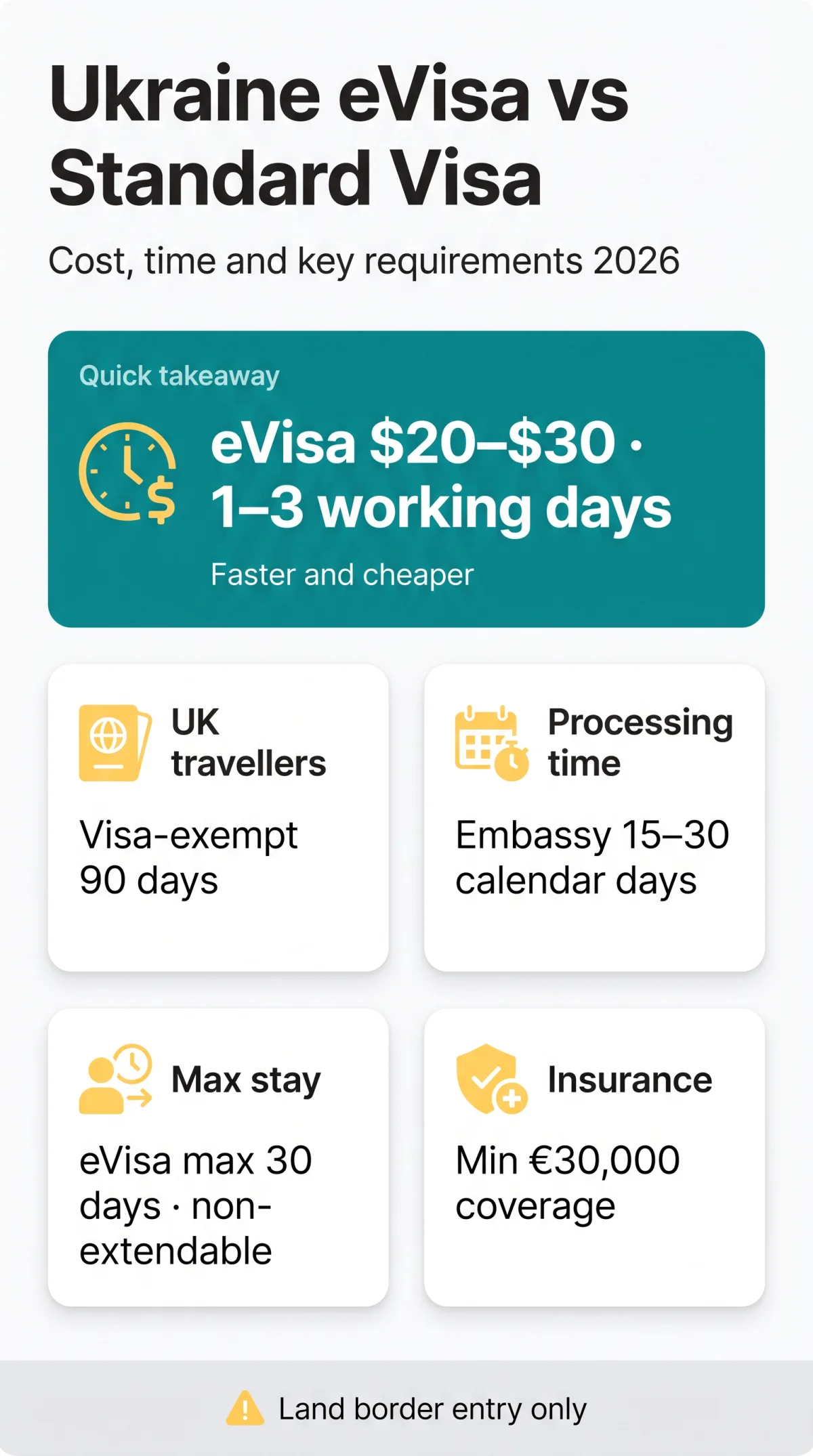
When comparing a ukraine evisa vs standard visa in 2026, the key differences lie in cost and speed. The Ukraine eVisa costs $20 to $30 and processes in 1 to 3 working days, whereas a standard embassy visa takes 15 to 30 calendar days with higher overall expenses.
UK citizens enjoy visa-exempt travel to Ukraine for short stays, meaning neither a Ukraine eVisa nor an embassy visa is required for tourist visits under 90 days. For non-exempt nationalities or those planning long-term stays, understanding the consular visa fee structure and processing timeline is essential.
In 2026, all international border crossing points require overland entry due to closed airspace. Choosing the fully digital e-Visa (Electronic Visa) over the traditional diplomatic missions route saves time and avoids the physical passport retention associated with an embassy application.
Do UK Citizens Need a Visa for Ukraine in 2026?
UK passport holders are visa-exempt for up to 90 days within any 180-day period, meaning neither a Ukraine eVisa nor an embassy visa is required for short tourist visits. This visa waiver has been active since 2005.
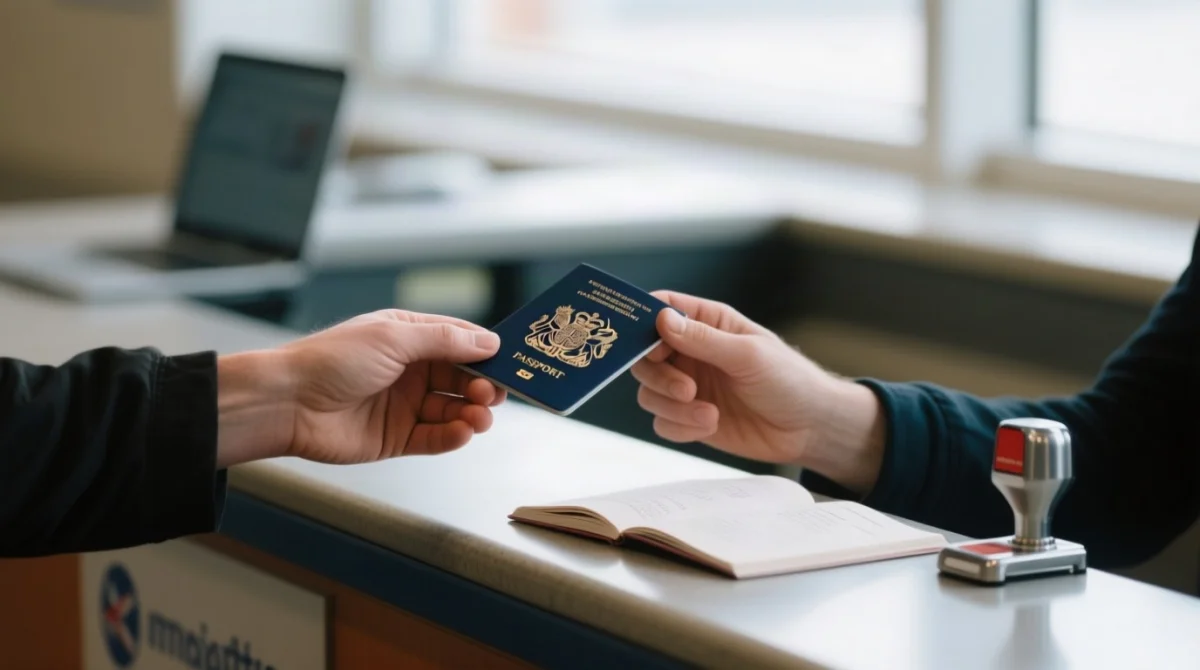
Ukraine does not offer a Visa on arrival facility. British tourists simply present their passports at the border.
The Ukraine eVisa serves non-exempt nationalities, allowing them to skip physical consulate visits. Because of the UK visa waiver, British citizens avoid both the Ukraine eVisa and the standard embassy visa processes for standard holidays. However, if your trip involves work, study, or staying beyond the allowed 90 days, you must apply for a Type D embassy visa. You can check whether your nationality qualifies through the full list of Ukraine eVisa eligible countries.
Ukraine eVisa vs Standard Visa: Side-by-Side Comparison
The Ukraine eVisa is a fully digital authorization for stays up to 30 days, while the standard embassy visa is a physical vignette for longer stays or non-eligible nationalities.
| Feature | Ukraine eVisa | Standard Embassy Visa |
|---|---|---|
| Application Method | Fully digital online system | In-person submission |
| Maximum Stay Duration | Up to 30 days | Longer than 30 days (Type D) |
| Visa Validity Period | Up to 6 months | Varies by visa type |
| Permitted Entry Types | Single or double entry | Single, double, or multiple entry |
| Standard Processing Time | 1 to 3 working days | 15 to 30 calendar days |
| Standard Consular Fee | $20 to $30 | Varies (often higher) + VFS fees |
| Urgent Procedure | $40 to $60 (1 working day) | Not available |
| Passport Retention | None | 5 to 15 business days |
| Biometric Data | Not required | May require in-person fingerprints |
| Visa on Arrival | Not available | Not available |
- Fully digital online application – no consulate visit
- Fast processing: 1 to 3 working days (urgent in 1 day)
- No passport retention during review
- No biometric data required
- Lower cost: $20 to $30 standard fee
- Maximum stay limited to 30 days only
- Non-extendable – cannot convert to a standard visa
- Single or double entry only
- Available only to eligible nationalities
- No visa on arrival as an alternative
Cost Breakdown: Ukraine eVisa vs Embassy Visa Fees
The Ukraine eVisa consular fee is $20 for single entry and $30 for double entry, whereas an embassy visa incurs comparable government fees plus additional VFS expenses. For a detailed breakdown of all chargeable amounts, see our complete Ukraine eVisa fee guide.
If you require faster processing, the urgent procedure doubles the consular fee to $40 for a single-entry Ukraine eVisa and $60 for double entry. In contrast, obtaining a standard embassy visa involves extra logistical costs. Applicants must factor in travel expenses to London and potential VFS application centre service charges, making the embassy visa route more expensive overall.
Regardless of choosing the Ukraine eVisa or the traditional embassy visa, all travellers must purchase mandatory travel medical insurance with a minimum coverage of €30,000.
Processing Times: How Long Does Each Visa Take?
A Ukraine eVisa processes in 1 to 3 working days, while a standard embassy visa requires 15 to 30 calendar days and involves physical passport retention. For a deeper look at the digital pathway’s timelines, read our guide to Ukraine eVisa processing times in 2026.
Applicants can expect standard Ukraine eVisa processing within 3 working days, with an urgent option available in just 1 working day. Conversely, the standard embassy visa demands significantly more time, as consular staff process applications over 15 to 30 days, retaining your physical passport for 5 to 15 business days during the review period. The digital Ukraine eVisa eliminates this inconvenience entirely.
Application Requirements & Documents Needed
In 2026, both the Ukraine eVisa and the standard embassy visa require a passport valid for at least 6 months, a minimum of €30,000 in medical insurance, and proof of sufficient funds totaling approximately $1,600 per 30-day stay. For a full itemised list of everything you need to submit, consult our Ukraine eVisa documents checklist for UK travellers.
Mandatory Documentation
- A valid passport containing a minimum of 2 blank pages.
- Travel medical insurance with at least €30,000 in coverage.
- Financial sufficiency proof of approximately $1,600 for a 30-day visit.
The Ukraine eVisa streamlines the application process by accepting digital document uploads and an English application form directly through the online portal. Conversely, securing an embassy visa demands physical document submission, in-person biometric data collection, and often requires certified translations or formal invitation letters.
UK citizens should verify that their travel insurance policy includes Ukraine – many UK policies exclude active conflict zones. If your insurer refuses, specialized companies offer policies specifically covering travel to Ukraine in 2026, satisfying requirements for both the Ukraine eVisa and the embassy visa.
Entry Types, Validity & Maximum Stay Duration
The Ukraine eVisa allows single or double entry with a maximum 30-day stay within a validity corridor of up to 6 months and cannot be extended or converted into a long-stay embassy visa.
It is crucial to differentiate between the visa validity period and the duration of stay. While your Ukraine eVisa might be valid for up to 6 months from the date of issue, your actual time spent inside the country cannot exceed 30 days. Furthermore, the Ukraine eVisa is strictly non-extendable.
If your travel plans require multiple entries over a prolonged period, or a stay exceeding 30 days, the eVisa will not suffice. Instead, you must apply for a Type D embassy visa, which grants extended residency rights and can lead to a formal residence permit.
How to Apply & Travel Logistics in 2026
You apply for the Ukraine eVisa online via the MFA portal, whereas the embassy visa requires an in-person appointment; regardless of visa, all 2026 entries must be via land borders.
Due to closed airspace, air travel remains suspended, meaning every traveller must enter via international land or rail border crossing points from Poland, Romania, Moldova, Slovakia, or Hungary.
- Ukraine eVisa: The Ukraine eVisa is fully online; approval comes by email via the MFA government portal. For a step-by-step walkthrough of the digital form, see our guide on how to apply for a Ukraine eVisa online.
- Standard Embassy Visa: The embassy visa mandates an in-person appointment in London, where the consulate retains your physical passport for 5 to 15 business days.
Which Option Is Right for You? – Decision Guide
UK tourists visiting for under 90 days need no visa at all, citizens of eVisa-eligible countries should choose the Ukraine eVisa for trips up to 30 days, and anyone needing a stay beyond 30 days must apply for a Type D embassy visa.
To simplify your decision in 2026, consider these common traveler scenarios:
- The Short-Term UK Tourist: You benefit from visa-free access. You need neither a Ukraine eVisa nor an embassy visa for holidays under 90 days.
- The Eligible Business Traveler: If you hold a non-UK passport from an eligible country and need to attend meetings for two weeks, the Ukraine eVisa is the fastest and cheapest route.
- The Long-Term Student or Worker: If you plan to study or work for 6 months, the eVisa is invalid. You must secure a Type D embassy visa before arriving.
Frequently Asked Questions (FAQ)
What is the difference between the Ukraine eVisa and a standard visa?
The primary difference between the Ukraine eVisa and a standard visa is the application method and processing time. The Ukraine eVisa is fully digital, costs $20 to $30, and takes 1 to 3 working days. A standard embassy visa requires an in-person appointment, passport retention, and takes 15 to 30 calendar days.
Can I get a Visa on arrival in Ukraine instead of an eVisa?
No, Ukraine does not offer a Visa on arrival at international border crossing points. Travellers must secure either a Ukraine eVisa or a standard embassy visa prior to their journey. The eVisa system completely replaces the outdated visa on arrival concept, ensuring clearance before you reach the overland borders in 2026.
How much does the urgent procedure for a Ukraine eVisa cost?
The urgent procedure for a Ukraine eVisa costs exactly double the standard consular visa fee. In 2026, the urgent fee is $40 for a single-entry Ukraine eVisa and $60 for a double-entry Ukraine eVisa. This expedited option guarantees your application processing time will be completed within 1 working day.
Do UK citizens need a Ukraine eVisa or an embassy visa for tourism?
UK citizens are visa-exempt and do not need a Ukraine eVisa or an embassy visa for short tourist visits in 2026. British passport holders are permitted to stay in Ukraine for up to 90 days within any 180-day period. An embassy visa is only required for long-term stays exceeding 90 days.
Can I extend my Ukraine eVisa or convert it to a standard visa?
No, you cannot extend a Ukraine eVisa or convert it into a standard embassy visa while inside the country. The eVisa permits a maximum stay duration of up to 30 days. If you require a longer stay or a residence permit, you must apply for a Type D embassy visa beforehand.
What medical insurance is required for a Ukraine eVisa or embassy visa?
Whether you apply for a Ukraine eVisa or a standard embassy visa, you must provide proof of travel medical insurance. The policy must have a minimum coverage of 30,000 Euros. This mandatory insurance requirement applies to all applicants submitting their supporting documentation for entry into Ukraine in 2026.
How long is a single-entry Ukraine eVisa valid for?
A single-entry Ukraine eVisa has a visa validity period of up to 6 months. However, this validity window is different from the duration of stay. Regardless of the 6-month validity, the maximum allowed stay in Ukraine on an eVisa is strictly limited to up to 30 days.
Do I need to submit biometric data for a Ukraine eVisa?
You do not need to submit biometric data for a Ukraine eVisa, as the entire process is handled via the online eVisa application portal. In contrast, applying for a standard embassy visa may require in-person biometric data submission, such as fingerprints, at a diplomatic mission or VFS application centre.
About the author: James Mitchell is a travel logistics researcher who has monitored Ukrainian border entry requirements since 2022 and has helped over 200 clients secure eVisas. He is not affiliated with the Ukrainian government.
Sources:
1) Ministry of Foreign Affairs of Ukraine (mfa.gov.ua) – visa information page (accessed September 2026).
2) UK Government FCDO travel advice for Ukraine (gov.uk).
3) State Border Guard Service of Ukraine (dpsu.gov.ua) – border crossing rules.